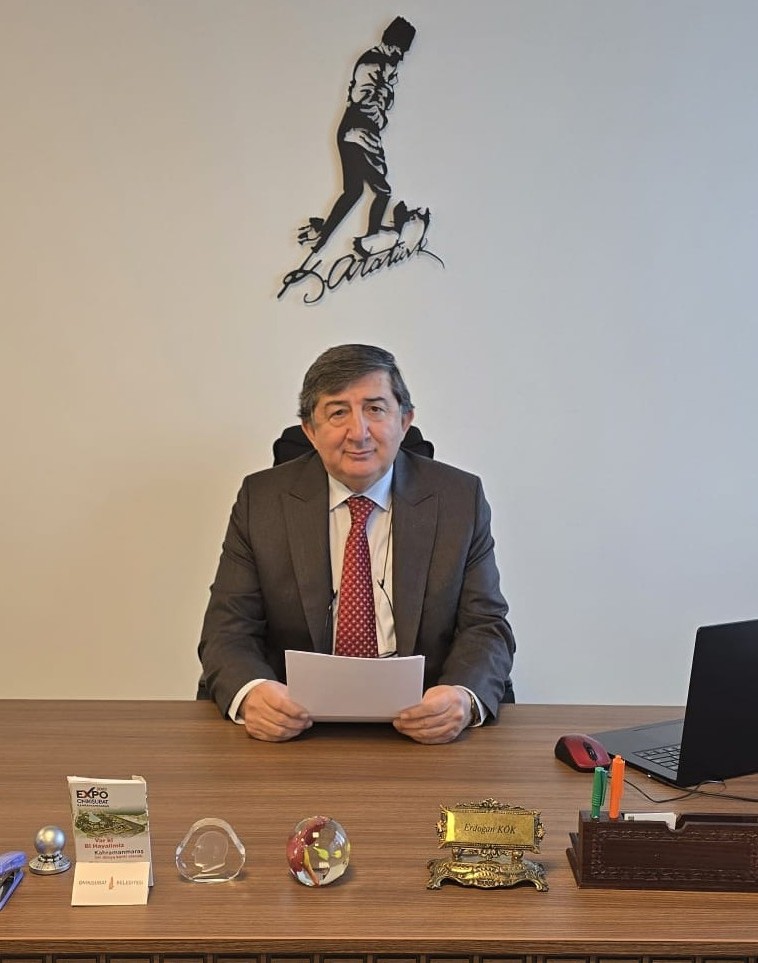
After many years in diplomacy, retired Ambassador Erdoğan Kök has identified sustainability as his new area of interest. However, his acquaintance with environmental issues goes back much further. In 1981, the year he graduated from university, his first job in a government office was at the Undersecretariat for Environment of the Prime Ministry (established in 1978). This career gave him an environmental awareness in all its dimensions. In those years, as environmental issues were gaining importance in Turkiye, air pollution reached extreme levels in various provinces, especially in Ankara. Although it cannot be compared to the 1952 London Smog Disaster, the fight against air pollution, especially in Ankara, started during this period. From that day on, environmental issues became a part of his life.
He continued to be closely involved in environmental issues during his foreign missions. In 1997, while in Tokyo, he acted as a host to the then Minister of Environment, Imren Aykut, who attended the preparatory meeting for the Kyoto Protocol. This was a valuable experience for him to refresh his knowledge on environmental policies and to witness an important international negotiation up close. More recently, he has had the opportunity to follow different themes on sustainability both domestically and internationally through his roles in the 2016 Antalya Expo and the 2023 Kahramanmaraş Expo (Horticulture Expo).
In recent years, the concept of ‘sustainability’ has been on the agenda frequently, especially in the business world. With new legislation, this issue has become an inevitable topic that attracts more attention not only from companies but also from public institutions and individuals.
In the following articles, Ambassador Erdoğan Kök aims to explain first the basic concepts, then its history, international regulations and financial dimension from his own point of view by addressing sustainability, which he has witnessed from different angles over the years, with its past and present. In this process, he aims to explore with his readers why sustainability has become so important and how critical an issue it actually is.